English (UK)
 Español
 Français
 Deutsch
 Português
 Italiano


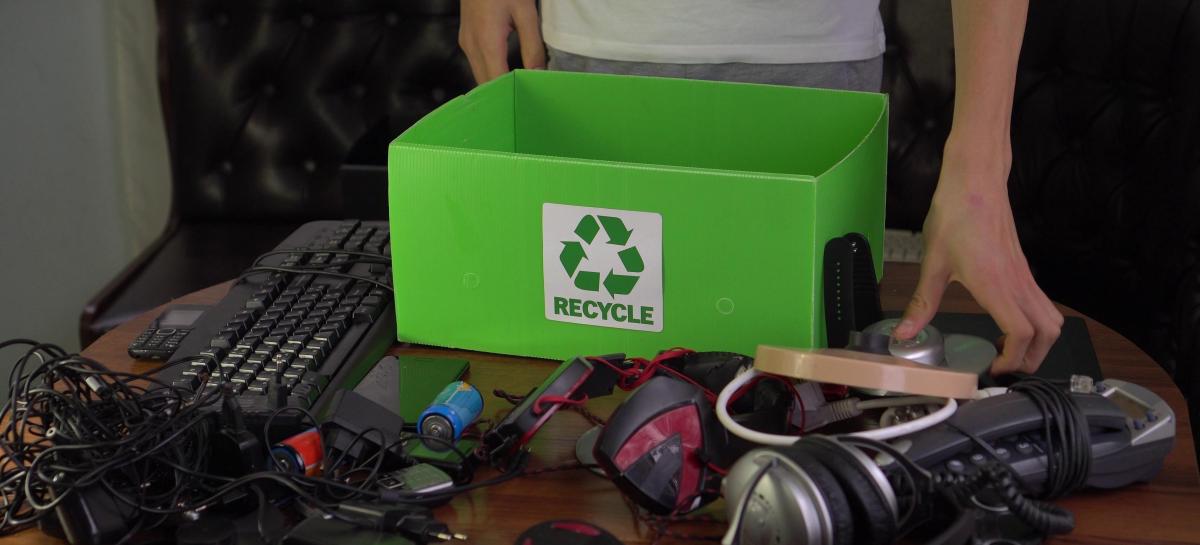
A common assumption inside UK businesses is that IT disposal means picking one route, either recycling everything or refurbishing everything. In practice, a properly run IT asset disposal process uses both, and the decision between them happens device by device. Refurbishment gives working equipment a second life with another user. Recycling breaks down what genuinely cannot be reused, safely and to WEEE standards. The two routes sit inside a single certified lifecycle, and the partner running the process decides which route each device takes based on clear triage criteria. This piece walks through how refurbishment and recycling fit together in a modern IT disposal workflow, what happens at each stage, and why the reuse-first model has become the standard for responsible ITAD. If you are stress-testing your own ITAD services or scoping a partner for the first time, this is the process you should expect to see.
What Actually Happens to Used Computers When a Business Retires Them
The first stage of any credible IT disposal process is secure collection with a documented chain of custody. This is not a courier van and a signature, it is a defined workflow that protects data, tracks the assets, and generates the paperwork you need for compliance.
The first-stage steps look like this:
- Onsite audit and asset inventory, the customer provides a list of equipment types, brands, and models
- Collection quote and schedule, based on volume, kit type, and postcode
- Secure collection by a certified courier with satellite tracking, so every asset is accounted for in transit
- Asset scanning at loading, so the inventory is verified before the equipment leaves the site
- Transit to a secure facility, with a Waste Transfer Note issued to the customer
- Arrival triage, where each device is assessed against reuse criteria
At this point, no data has been touched. The devices are still in the state you handed them over in, tracked, sealed, and ready for the computer recycling or refurbishment routing decision. That decision comes next.
How Refurbishment Fits Into the IT Disposal Lifecycle
Refurbishment is the reuse route, and it is the first route considered for every device that meets the criteria. The criteria are straightforward: the device must be in functional condition, of a specification that another user can genuinely use, and within the age window that makes parts and support available.
Before any refurbishment work begins, the device goes through certified data destruction. This is non-negotiable. Data is sanitised via a three-level overwrite with verification, using HMG and NIST-approved software, and every wipe is accompanied by a full disk audit including the serial number. If the drive is inoperable or has bad sectors, it is removed and physically destroyed instead, with a certificate of destruction issued for the specific asset. Secure data destruction is the precondition for everything that follows, and no device moves to refurbishment until the wipe is complete and verified.
Refurbishment itself covers:
- Functional testing across processor, memory, storage, screen, keyboard, and ports
- Reimaging with a clean operating system
- Component replacement where a failed part is repairable
- Cosmetic grading so recipients know what to expect
- Redistribution to schools, NGOs, and community organisations at charitable rates, in the UK and internationally
This is how donated laptops and desktops end up in the hands of the people who need them, rather than being scrapped for material recovery.
When Recycling Is the Right Route for Used IT Hardware
Recycling is not the failure mode of the process. It is the correct route for equipment that genuinely cannot be reused, and it is handled to the same certified standards as refurbishment.
The equipment that routes to recycling includes:
- End-of-life devices past the age window for redistribution
- Damaged or non-functional units where repair is not viable
- Drives that require physical destruction for data security reasons
- Non-standard components with no reuse pathway
- Peripherals and cabling at the end of their useful life
Everything routed to recycling goes through WEEE-compliant recycling with a zero-to-landfill standard. Downstream recyclers recover materials for reuse in new products, and the chain of custody documentation continues right through to material recovery. High-risk drives are physically destroyed at a secure List X facility, with a certificate of destruction issued for audit purposes.
The point is that a certified partner does not send working equipment to recycling because it is easier. Every device gets the reuse assessment first.
Why Reuse First, Then Recycle Is the Standard Approach for Responsible ITAD
The waste hierarchy, formalised in UK and EU environmental law, places reuse above recycling for a reason. When a laptop is manufactured, the majority of its lifetime carbon footprint is locked in at that point. Every additional year the device stays in service preserves that embedded carbon and avoids the emissions of manufacturing a replacement.
For UK enterprises, reuse first has three concrete reporting benefits:
- Scope 3 emissions, reuse routes generate a defensible carbon-saved figure that recycling routes cannot match
- ISO 14001 alignment, the environmental management standard treats reuse as the higher-value outcome
- ESG social value, redistributing working devices to schools and NGOs creates measurable social impact alongside the environmental result
This is the commercial case for choosing a partner that handles both refurbishment and recycling inside one process. A recycling-only contract routes everything to material recovery, whether it needs to go there or not. Donating retired IT equipment through a certified reuse-first partner extracts the full environmental and social value from the estate. For businesses that want to go further and directly fund our mission, reuse and financial support work in parallel, not as alternatives.
What a Full ITAD Process Looks Like From Collection to Certificate
Here is the end-to-end process in the order it happens. This is what a stakeholder should be able to see documented before signing an ITAD contract.
- Onsite audit and asset inventory, agreed with the customer before collection
- Secure, satellite-tracked collection with a Waste Transfer Note issued at pickup
- Certified data destruction to HMG and NIST standards, with a full disk audit for every drive
- Triage decision, refurbishment or recycling, made against defined criteria
- Refurbishment and redistribution to end recipients at charitable rates, or WEEE-compliant recycling with physical destruction of high-risk drives where required
- Certificates issued, covering data destruction, WEEE compliance, and impact reporting for ESG disclosure
Every step generates documentation. That documentation is what turns an ITAD contract from a logistics exercise into audit-ready evidence.
Combine Refurbishment and Recycling Under One Certified IT Disposal Partner
Computer Aid runs both routes inside a single certified lifecycle through our partner Tier 1 Asset Management. The credentials behind the process are ISO 27001 for information security, ISO 14001 for environmental management, Cyber Essentials for cyber security, HM Government accreditation, and the Queen’s Award for Enterprise. Every collection is satellite-tracked, every drive is wiped or physically destroyed to HMG and NIST standards, every asset routed to recycling goes through the WEEE-compliant route to a zero-to-landfill standard, and every project generates a certificate of destruction, a WEEE compliance record, and a sustainability report with carbon saved and beneficiary detail. If you are ready to route your retired IT through a partner that handles refurbishment and recycling together, get in touch and we will scope the IT disposal process for your estate.